Blogs
Achievers College
Training Team
20 Jul 26
Learn about Duty of Care for support workers in Australia, including legal responsibilities, ethics, privacy, consent and workplace compliance.
Duty of Care applies to support workers in:
 Aged careDisability supportCommunity servicesHome and residential careHealthcare settingsNDIS servicesGive safe, ethical and person centred care to avoid unnecessary harm to clients.Foster the rights of clients, informed decision making, and overall wellbeing.Abide by the Australian health care regulations and uphold professional standards.Enhance safety in the workplace, minimise risk and service quality.Build trust with clients, families, employers and regulators while supporting aged care compliance.Duty of Care: Ensure that clients are protected from foreseeable harm.Negligence: Do not engage in conduct or indicate actions that might result in harm or put a client at risk.Reasonable Care: Provide care that aligns with their training, skills, and scope of practice.Reporting Obligations: Report incidents, abuse, neglect, hazards or safety concerns promptly through appropriate means.Respect: Respect each client's preferences, rights and individuality.Dignity: Maintain confidentiality and provide sensitive and respectful care to clients.Independence: Support clients to make decisions and be self-determined.Cultural Safety: Respect cultural, spiritual and language differences.Professional Boundaries: Maintain respectful professional relationships and avoid conflicts that may affect client care.
Support workers can typically:
Provide assistance with everyday routines, personal hygiene, and mobility needs.Support meal preparation and medication prompting (where trained).Provide social and emotional support.Track client wellbeing and notify relevant staff about any changes.However, support workers cannot:
Conduct clinical procedures beyond the scope of training, e.g., wound care, injections.Provide diagnosis of medical conditions or alter medication doses.Take significant health care decisions for a client without permission.Privacy: Handle client information securely and comply with the Privacy Act 1988 when collecting, storing, and sharing data.Confidentiality: Maintain client's confidentiality and ensure that information is only accessed by those with permission.Health Information: Take extra precautions to process sensitive health information, as well as following workplace procedures.Informed Consent: Provide clear care and ensure the client understands and agrees before support is provided.Aged Care Quality Standards: Promote safe, high-quality and rights-based aged care.NDIS Practice Standards: Set quality and safety requirements for NDIS providers and workers.Australian Commission on Safety and Quality in Health Care: Develops national standards to improve healthcare safety and quality.Privacy Act 1988: Regulates the collection, use and protection of personal and health information.Work Health and Safety (WHS) Laws: Require safe workplaces to protect both clients and workers.Failing to report incidents or potential safety risks in a timely manner.Sharing confidential client information without authorisation.Performing tasks outside their scope of practice.Making decisions for clients instead of supporting informed choice.Not following workplace policies or updated training.Follow organisational policies and individual care plans.Communicate effectively with clients, families, and healthcare teams.Record incidents and client observations accurately and promptly.Seek guidance when a situation is beyond your knowledge or scope of practice.Keep your skills up to date through regular training and professional development.Training helps support workers:
Understand Australian healthcare legislation.Apply legal and ethical responsibilities in everyday practice.Recognise and report risks promptly.Work within their scope of practice.Protect client rights, privacy and confidentiality.Meet employer and industry standards.Build confidence and improve career opportunities.Build the skills to deliver safe, person-centred care with Achievers College
 Central Adelaide locations
 Daily sessions available
 Small class sizes (max 12)
 4.9/5 rating (250+ reviews)
Next session: Tomorrow 9:00 AM
3 spots remaining
Join thousands of Adelaide residents who've gained the confidence to act in emergencies. Our next session starts tomorrow with only 3 spots remaining.
Book Your Spot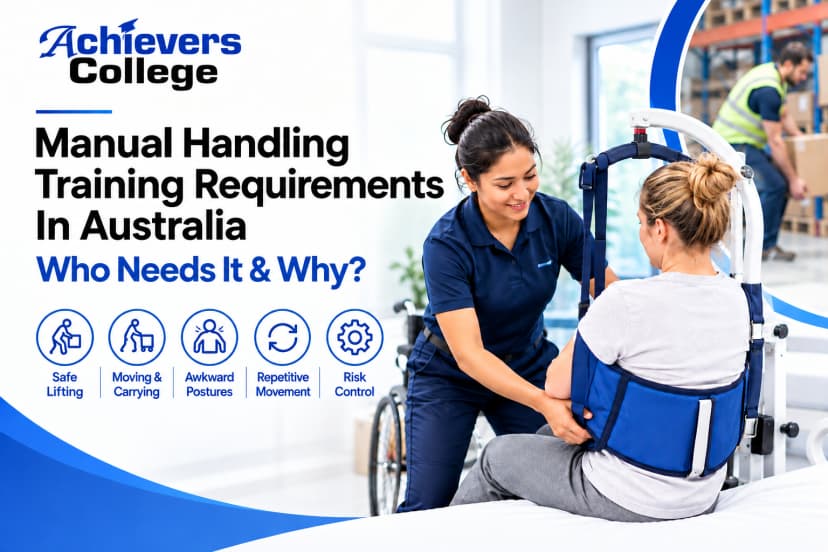
29 Sept 26
Need Manual Handling Training in Australia? Discover WHS requirements, who needs training, refresher guidance, and practical tips for support workers.

27 Sept 26
Do NDIS support workers need first aid? Learn provider requirements, CPR renewal, HLTAID011 and how NDIS training compares with aged care.
01 Sept 26
Learn essential seizure first aid for support workers, including emergency steps, seizure safety and when to seek help across Australia.