What Is Medical Assistant Training?
Health care training provides care support workers with the knowledge and skills to respond to health issues in care settings. The training covers a variety of topics such as:
In addition, medical assistant training equips support workers to be effective and responsible in unexpected changes in client health. Trained support workers are not a substitute for health professionals but a vital first responder - a connection between the client and clinical care.
Why Medical Assistant Training Matters in South Australia
South Australia's growing aged and disability population has increased the demand for support workers with proper medical assistance skills. Without appropriate training, workers may unintentionally place clients at risk.
As a result, organisations and regulators now place strong emphasis on competency-based training. NDIS providers and aged care employers across South Australia increasingly require workers to complete recognised medical assistance training before starting work.
Who Needs Medical Assistant Training in SA?
Medical assistance training is relevant to a broad range of support roles across South Australia. Specifically, the following professionals benefit most from this training:
Who benefits most

NDIS support workers who assist participants with complex health needs.
Aged care workers who manage medications and monitor the health of elderly clients.
Community care workers who support clients in home-based settings.
Disability support workers who work with clients who have chronic or complex medical conditions.
School support officers who assist students with medical needs in educational settings.
Moreover, individuals who are transitioning into the support sector - whether from other industries or re-entering the workforce - will find that medical assistant training strengthens their employability and professional confidence significantly.
Key Units Covered in Medical Assistant Training
A nationally recognised training program in medical assistance in South Australia normally contains units from the Certificate III or Certificate IV in Individual Support (or similar). These units are both theoretical and practical. Significantly, this training teaches:
1. Assist with Medication
Support workers are trained to safely administer oral, topical or inhaled medicines in accordance with the directions of a registered health professional. Additionally, they study how to identify and report adverse reactions effectively.
2. Understand and Respond to Indicators of Abuse
This is a non-medical unit that ensures that support workers are able to recognise and act on physical cues signifying mistreatment or neglect in a timely fashion.
3. Assist Clients with Chronic Conditions
This unit provides opportunities for workers to learn how to support people living with diabetes, cardiovascular disease, epilepsy or respiratory illness - which are often conditions that need to be managed consistently and monitored by a healthcare professional.
4. Infection Prevention and Control
Support workers are taught to ensure good hygiene practice, correctly use personal protective equipment (PPE) and reduce the risk of the spread of infectious disease in care settings. The competency gained even more significance after the COVID-19 pandemic.
5. First Aid and Emergency Response
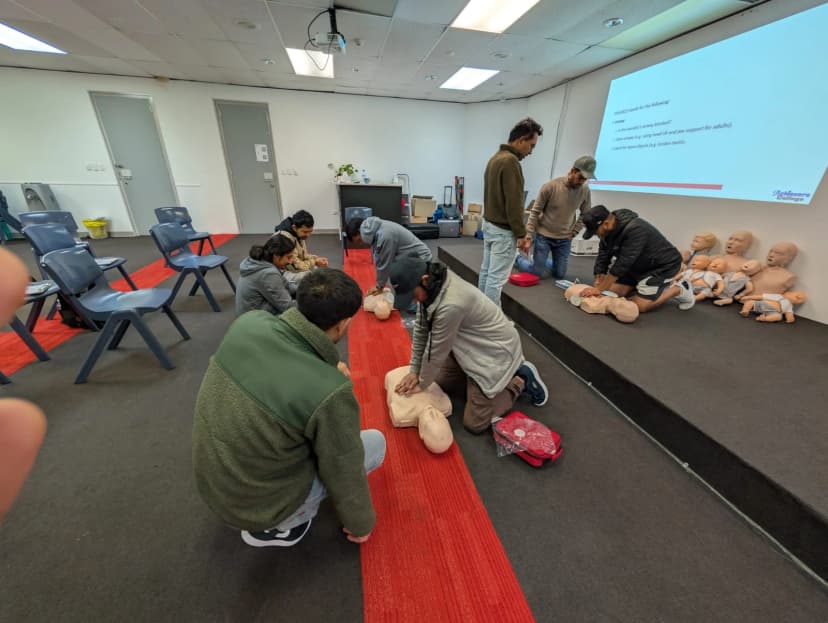
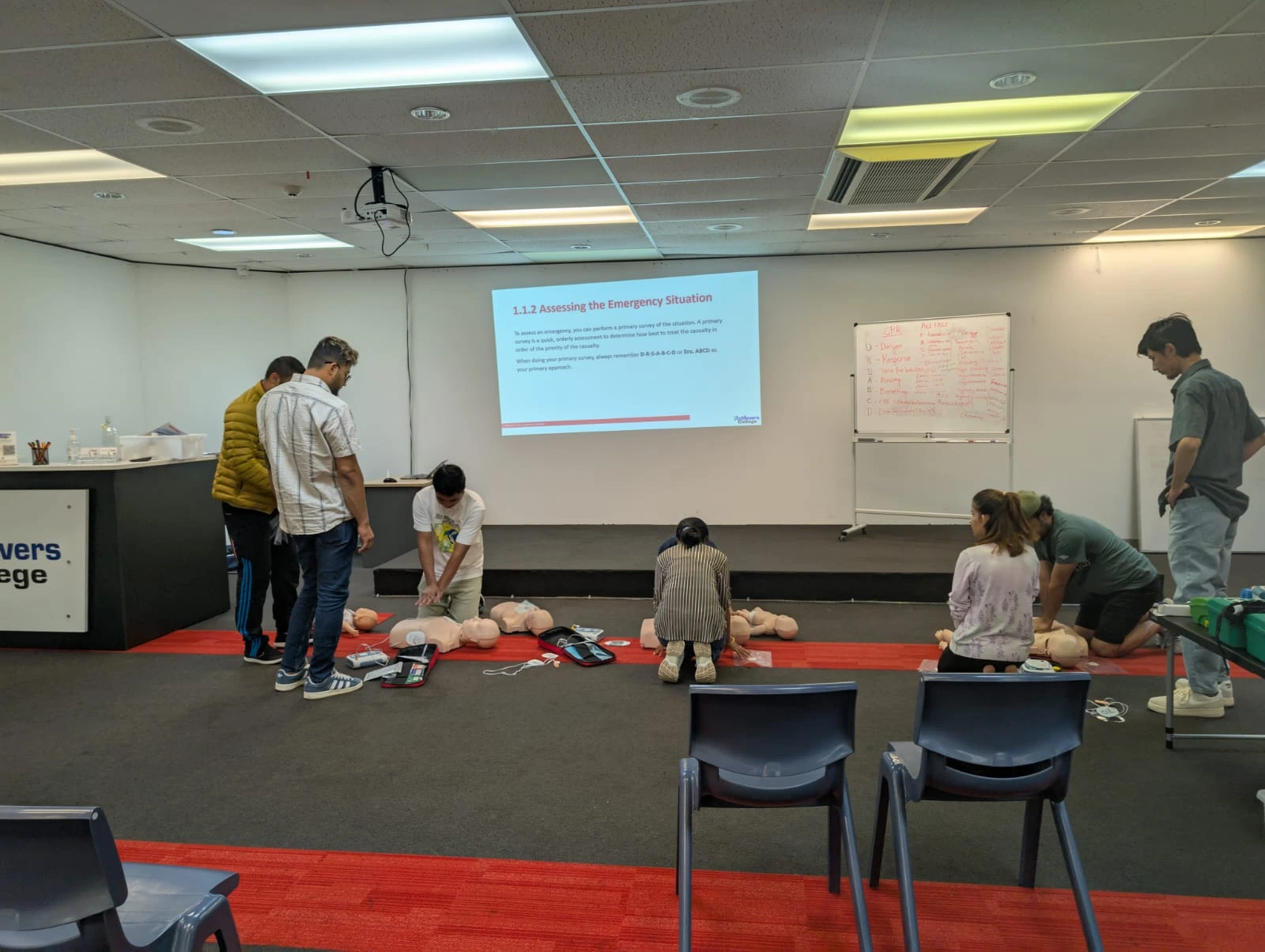
Certified first aid training forms a core part of medical assistance preparation. Workers learn
CPR, how to use a defibrillator, and how to respond to choking, falls, anaphylaxis, and other emergencies calmly and effectively.
Medical Assistant vs Midazolam Training
Key differences between medical assistance and midazolam training:
| Aspect | Medical Assistant | Midazolam Training |
|---|
| Level | Basic / Core support | Advanced / High-intensity support |
| Purpose | Everyday medication support | Emergency seizure management |
| What it covers | Oral medications, documentation, routine care | Rescue medication for prolonged seizures |
| Clients | General NDIS, aged care, disability clients | Clients with epilepsy or seizure conditions |
| NDIS classification | Standard support | High-intensity daily personal activity |
| Training requirement | Required for most support workers | Required only for specific clients with seizure plans |
How Training Organisations Deliver Medical Assistant Training in South Australia
Registered Training Organisations (RTOs) in South Australia deliver medical assistance training through several flexible formats to accommodate the needs of working adults:
Delivery formats
Face-to-face classroom learning at a registered campus.
Online theory modules combined with in-person practical assessments.
Workplace-based training where learners apply skills in their own employment setting.
Recognition of Prior Learning (RPL) for workers with prior relevant experience.
As a result, this flexible delivery of training has enabled aspiring and existing support workers across metropolitan Adelaide and regional South Australia to complete quality training without giving up on their commitments.
What to Look for in a Quality Medical Assistant Training Provider
The selection of the right training centre is a big deal. As a result, prospective learners must assess providers based on the following:
What to check
ASQA registration: In order to deliver nationally recognised qualifications the provider must be registered with the Australian Skills Quality Authority (ASQA).
Qualified trainers: Trainers need not only academic qualifications but also the relevant experience in the field of health or community services.
Practical components: Theory and hands-on simulation or placement in the workplace.
Student support services: Good providers will provide learner support services such as language assistance, flexible assessment methods, and industry mentors.
Graduate pathways to industry: An active RTO makes sure that graduates have access to employment opportunities within the South Australian care industry.
Medical Assistant Training Course Overview
The three courses SA support workers need:
NDIS and SA Health Compliance
Understanding the compliance landscape is essential for both support workers and NDIS providers in South Australia.
NDIS Quality and Safeguards Commission
The
NDIS Quality and Safeguards Commission sets the practice standards that all registered NDIS providers must follow. For medication support, these standards require:
Failure to meet these requirements can impact participant safety and may lead to provider deregistration.
SA Health
SA Health guidelines state that non-nursing staff providing medication support must work within an approved care plan. This includes:
For high-risk medications like Midazolam, specific training and clear emergency protocols are required within the client's care plan.
Skills SA and VET Recognition
The CHCSS00070 Medication Skill Set is a recognised pathway in South Australia. Achievers College is an ASQA-registered RTO, ensuring nationally recognised training that meets Australian standards.
Career Outcomes After Medical Assistant Training
Completing a recognised medical assistance training program opens numerous career pathways across South Australia's growing care sector. Specifically, graduates can pursue roles such as:
Career pathways
Personal care assistant in residential aged care or home care
NDIS support worker for disability service providers
Community health worker supporting vulnerable populations
Medical administration assistant in health clinics or GP practices
Healthcare assistant in hospital or rehabilitation settings
The aged care and disability areas of South Australia continue to demand more and more medical assistant jobs and trained support workers. Obtaining medical assistance training qualifications may help you boost your employment opportunities and make yourself more attractive to employers looking for qualified personnel.
In addition, medical assistance training can provide a pathway to further qualifications such as Certificate IV in Ageing Support, Diploma of Nursing or enrolled nursing. Hence, training is not only a skillset, but a stepping stone towards continuous career development in the healthcare sector.
Conclusion
Medical assistance training is a key skill for the South Australian aged and disability/care services, as well as community services, and support workers. Training in healthcare enables workers to deliver safer, more confident care, while making them more employable in the booming healthcare industry, ranging from medication support to emergency response and chronic condition management.
Join
Achievers College today and help make your next step into the industry a successful one by choosing a medical assistant training program in South Australia that is focused on industry.


 Central Adelaide locations
 Daily sessions available
 Small class sizes (max 12)
 4.9/5 rating (250+ reviews)