What Is Manual Handling?
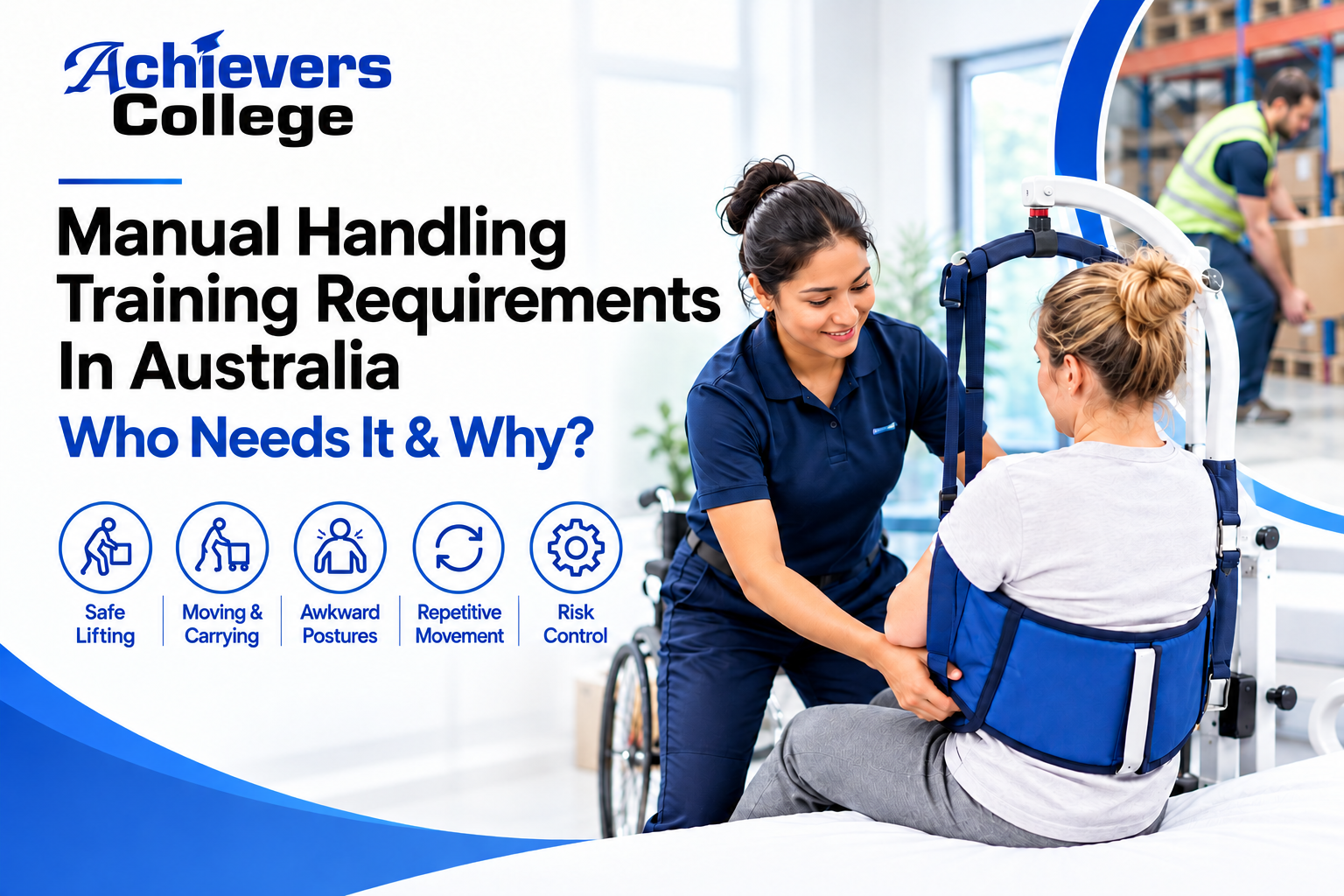
Manual handling involves using physical effort to move, hold, support, or restrain an object, person, or animal. For example, workers may move boxes, push trolleys, transfer clients, carry equipment, or assist people with daily activities.
Safe Work Australia refers to higher-risk activities as hazardous manual tasks. These tasks can involve repetitive movement, sustained force, sudden force, awkward postures, or vibration.
Therefore, a worker does not need to lift something extremely heavy before a task becomes hazardous.
Is Manual Handling Training Required in Australia?
Australian WHS laws require businesses to manage risks associated with hazardous manual tasks. However, Australian law does not create one universal manual handling course for every worker.
Instead, employers must provide information, training, instruction, and supervision that protect workers from workplace risks. Safe Work Australia also states that workers need suitable training before performing their specific work tasks.
However, training works alongside safer work design, suitable equipment, and effective risk control measures.
Do All Workers Need Manual Handling Training?
Not every Australian worker needs the same level of training. The need depends on the worker's duties, workplace hazards, equipment, and level of risk.
For example, a
disability support worker may need people-handling training. Meanwhile, a warehouse worker may need training for lifting, carrying, stacking, and moving goods.
Consequently, employers should match training with the actual tasks workers perform.
Who Needs Manual Handling Training?
Manual handling risks appear across many Australian industries. Some workers face these risks more frequently because their roles involve regular physical tasks.
1. Support Workers
Support workers assist clients with mobility, transfers, personal care, and daily activities. Training helps them manage people-handling risks safely.
2. Disability Support Workers
Disability support workers may assist clients with beds, wheelchairs, showers, and vehicles. Training helps them follow safe handling procedures and use equipment correctly.
3. Aged Care Workers
Aged care workers regularly assist with mobility, transfers, repositioning, and personal care. Training helps them use hoists, transfer aids, and other equipment safely.
4. Healthcare Workers
Healthcare workers may move patients, equipment, beds, and supplies. Manual Handling Training helps reduce risks from lifting, pushing, pulling, and awkward movements.
5. Warehouse and Logistics Workers
Warehouse workers frequently lift, carry, push, pull, stack, and move products. Training helps them manage repetitive tasks and use suitable equipment safely.
6. Construction and Trades Workers
Construction workers often handle materials, tools, and equipment. Training helps them manage risks from lifting, carrying, pushing, pulling, and awkward postures.
7. Retail and Hospitality Workers
Retail and hospitality workers may regularly move stock, boxes, equipment, and supplies. Training helps reduce risks from repetitive and physically demanding tasks.
What Does Manual Handling Training Cover?
Effective Manual Handling Training should relate to the actual work performed by employees.
A useful course should help workers understand hazards rather than simply memorise one lifting technique.
Common training areas include:
- Identifying hazardous manual tasks
- Understanding common manual handling risks
- Safe lifting and carrying techniques
- Recognising awkward postures
- Managing repetitive movements
- Understanding force and fatigue
- Using mechanical aids safely
- Following workplace procedures
- Reporting hazards and incidents
- Applying task-specific risk controls
Safe Work Australia recommends training workers to perform their specific tasks safely.
Does Manual Handling Training Teach Only Safe Lifting?
No. Modern manual handling focuses on the whole task rather than lifting technique alone.
For example, workers should consider the load, environment, equipment, distance, posture, movement, and available assistance.
Therefore, telling workers to simply "bend their knees" does not address every manual handling risk.
Manual Handling Training for Support and Care Workers
A client’s mobility, weight, movement, and behaviour can affect how safely a task should be performed. For example, workers may help clients transfer between beds and wheelchairs.
Safe Work Australia recommends suitable equipment, training, and appropriate assistance for people-handling tasks.
What Should Support Workers Learn?
- Understand workplace handling procedures and each client’s specific needs.
- Know when to ask for assistance during manual handling tasks.
- Use the correct handling equipment and follow safety instructions.
- Follow the client’s care plan and workplace risk assessment.
- Avoid improvising transfers, even when a task seems quick or familiar.
How Often Should Manual Handling Training Be Completed?
Australian WHS rules do not set one fixed refresher period for every workplace. Instead, employers should provide training when workers need it to perform their tasks safely.
Refresher training may be needed when:
- A worker starts a new role
- Manual handling tasks change
- New equipment is introduced
- Workplace procedures change
- An incident or near miss occurs
- Unsafe practices are identified
- A new hazard appears
- Workers need extra guidance or supervision
Training should match the worker’s tasks and workplace risks. It should also work alongside proper risk assessment and other safety controls.
Does Manual Handling Training Need to Be Nationally Recognised?
Not every
manual handling course needs to provide a nationally recognised qualification. The right training depends on the employer, job role, workplace risks, and industry requirements.
Some employers may require specific qualifications, certificates, or proof of competency. Therefore, workers should check their employer’s requirements before choosing a course.
Manual Handling Training vs Manual Handling Certification
These terms can be confusing, especially for job seekers. Here’s a simple breakdown:
| Manual Handling Training | Manual Handling Certification |
|---|
| Teaches workers how to identify and manage manual handling risks. | Provides a certificate after completing a specific training program. |
| Focuses on safe work practices and handling procedures. | Shows that the learner completed the relevant course. |
| May form part of workplace training. | May be requested by certain employers or roles. |
| Does not always provide a nationally recognised qualification. | Does not automatically meet every employer’s requirements. |
Tip: Before enrolling, check what training, certificate, or qualification your employer requires.
Why Manual Handling Training Matters for Job Seekers
Manual handling training can be useful for people looking to work in physically demanding industries.
Workers in aged care, disability support, healthcare, warehousing, and logistics may benefit from these skills. Training can also show employers that you understand basic workplace safety.
However, training should support practical skills and workplace induction. A certificate alone does not replace job-specific training or instructions.
What Are the Benefits of Manual Handling Training?
Proper training helps workers recognise manual handling risks before starting a task. It also supports safer work practices and helps employers meet their WHS responsibilities.
Key Benefits of Manual Handling Training:
- Better awareness of workplace hazards
- Safer handling and movement techniques
- Better understanding of workplace procedures
- Correct use of handling equipment
- Earlier reporting of hazards and incidents
- Greater confidence during physical tasks
- Stronger support for workplace WHS practices
Most importantly, training works best alongside suitable equipment, safer work practices, and effective risk controls.
Can Training Alone Prevent Manual Handling Injuries?
No. Training alone cannot remove every manual handling risk at work.
Employers should also reduce risks by improving work areas, changing task layouts, providing suitable equipment, and improving work processes.
Training helps workers understand these controls and use them correctly.
How Employers Can Build a Safer Manual Handling Workplace
Employers can create a safer workplace by taking a practical, step-by-step approach:
- Identify hazards: Find manual tasks that could cause injury or strain.
- Assess the risks: Understand what makes each task hazardous.
- Reduce the risks: Remove hazards where possible or introduce suitable controls.
- Involve workers: Ask employees about challenges they face during daily tasks.
- Review controls: Check regularly that safety measures continue to work.
- Provide training: Make sure workers understand the procedures, equipment, and controls they need.
Get Practical Manual Handling Training in Adelaide
Knowing the right technique is important, but practising it builds real confidence. Get practical training designed around the manual handling situations you may face at work.
Achievers College offers
HLTWHS005 Conduct Manual Tasks Safely in Adelaide for aged care, disability, and healthcare workers. The training covers safe transfers, equipment use, and practical workplace situations you may face on the job.
Ready to Build Safer Handling Skills?

 Central Adelaide locations
 Daily sessions available
 Small class sizes (max 12)
 4.9/5 rating (250+ reviews)