Why First Aid Matters for NDIS Support Workers
NDIS support workers often work alone. Many shifts happen in a participant's home or out in the community. Emergency services can take time to arrive, especially in regional areas.
Some participants also live with complex health conditions. Epilepsy, diabetes, and severe allergies all carry real emergency risk. A trained
support worker can respond immediately, before paramedics reach the scene.
This is why most providers treat first aid as non-negotiable. It protects participants. It also protects workers from liability if something goes wrong.
Is First Aid Legally Mandatory for NDIS Support Workers?
The
NDIS Quality and Safeguards Commission doesn't name one specific first aid unit as compulsory. Instead, the
NDIS Practice Standards require providers to ensure workers have adequate skills to deliver support safely.
In practice, this obligation almost always translates into a
first aid requirement. Providers delivering
Supported Independent Living (SIL) or
high-intensity supports face even stricter expectations. Workers supporting participants with epilepsy, tracheostomies, or complex medical needs typically need current, verifiable first aid training.
So while the law speaks in general terms, the outcome is specific. Almost every registered provider requires current
first aid and CPR before rostering a worker.
What First Aid Certification Do NDIS Support Workers Need?
HLTAID011 - Provide First Aid
HLTAID011 is the standard qualification most NDIS providers request. It covers CPR, using a defibrillator (AED), wound care, and managing an unconscious casualty. It also covers anaphylaxis, seizures, and choking response - all directly relevant to disability support work.
This certificate is valid for 3 years. However, one part of it expires much sooner.
HLTAID009 - CPR Course
The CPR component inside HLTAID011 must be refreshed
every 12 months, per
Australian Resuscitation Council guidelines. Many workers miss this. Their first aid certificate still shows two years of validity, but their CPR skills have technically lapsed.
Providers commonly enforce annual CPR renewal even though the broader certificate hasn't expired. Treat CPR as a yearly commitment, not a three-year one.
NDIS First Aid Requirements vs Aged Care: What's Different?
Support workers moving between NDIS and aged care often assume the requirements match exactly. They're similar, but not identical.
| Requirement | NDIS Support Workers | Aged Care Workers |
|---|
| Standard certificate | HLTAID011 Provide First Aid | HLTAID011 Provide First Aid |
| CPR renewal | Annual (12 months) | Annual (12 months) |
| Legal mandate | Practice Standards imply it; not a named unit | Similarly implied via Aged Care Quality Standards |
| Extra requirements | NDIS Worker Screening Check, NDIS Worker Orientation Module | Police check, sometimes manual handling certification |
| Complex care add-ons | High-intensity supports training (tracheostomy, PEG feeding, seizure management) | Dementia care, palliative care training |
The core first aid unit overlaps almost completely. The real difference lies in the surrounding compliance layer - worker screening, orientation modules, and sector-specific complex-care training.
How Often Do NDIS Support Workers Need to Renew First Aid?
Renewal timelines catch out even experienced workers. Here's the breakdown, based on current industry practice:
- HLTAID011 (full first aid certificate): renew every 3 years
- HLTAID009 (CPR component): renew every 12 months
- NDIS Worker Screening Check: renew every 5 years
- NDIS Worker Orientation Module: no fixed expiry, but refresh every 1-2 years is best practice
What Happens If Your First Aid Certificate Lapses?
A lapsed certificate isn't just a paperwork issue. Most providers won't roster a worker with expired
first aid or CPR, since it creates a direct compliance risk under their NDIS registration.
You may also lose shifts immediately if screening reveals a lapse. Some providers pause rostering until the certificate is renewed and evidence is submitted. This directly affects your income and your standing with the provider.
Renewing early avoids this disruption entirely.
Book your CPR refresher a month before it lapses, not the week after.
How to Get First Aid Certified as an NDIS Support Worker
Getting certified is straightforward, and most courses run in a single day. Here's the typical process:
- Choose an accredited RTO delivering HLTAID011 Provide First Aid.
- Complete the practical, face-to-face session - this unit can't be fully completed online, since assessors need to see CPR technique demonstrated.
- Receive your Statement of Attainment, valid for 3 years.
- Diarise your annual CPR refresher, separate from the 3 year renewal.
- Keep a digital copy for your provider's onboarding and screening process.
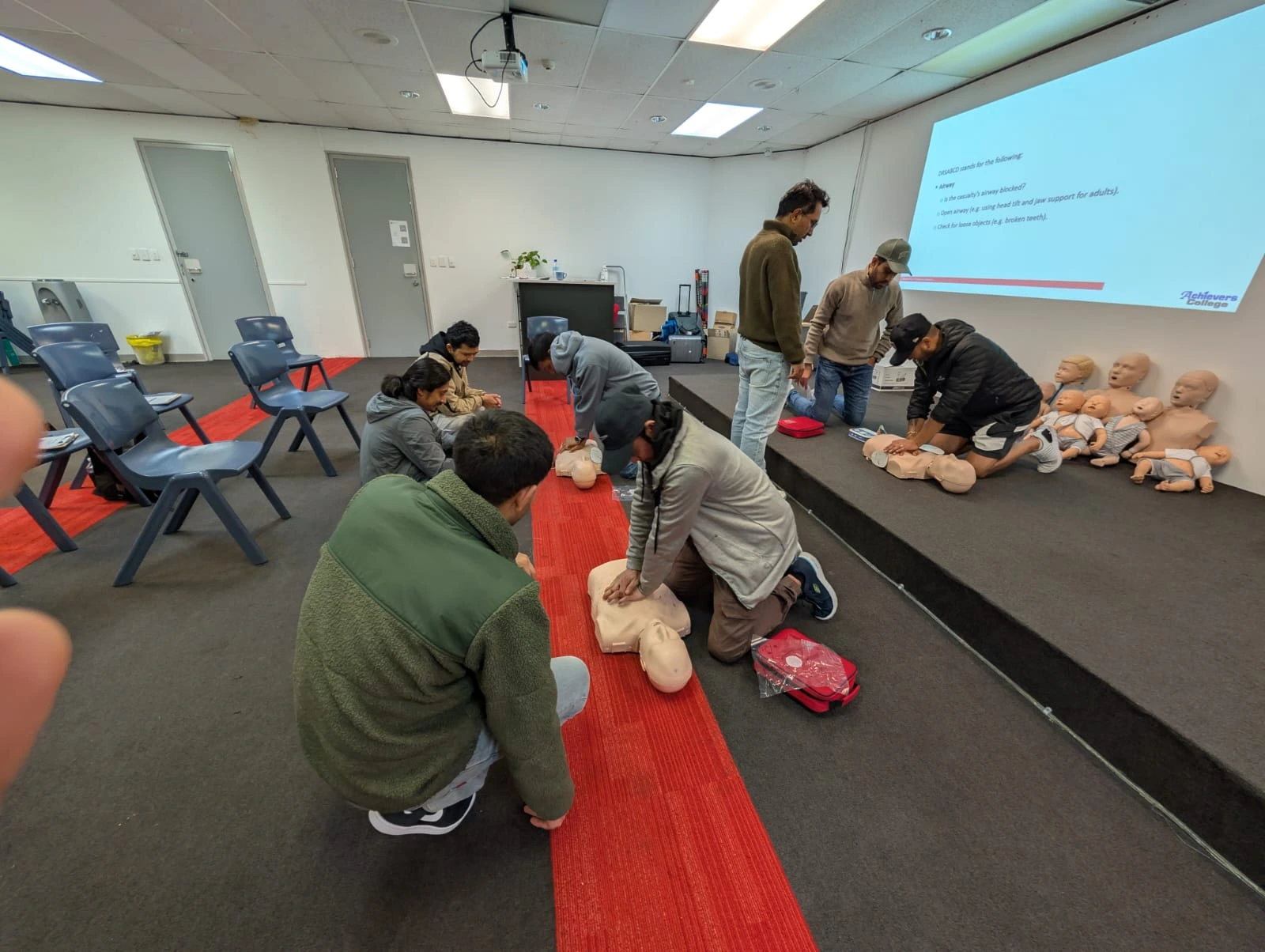
Get First Aid Certified in Adelaide
Achievers College delivers
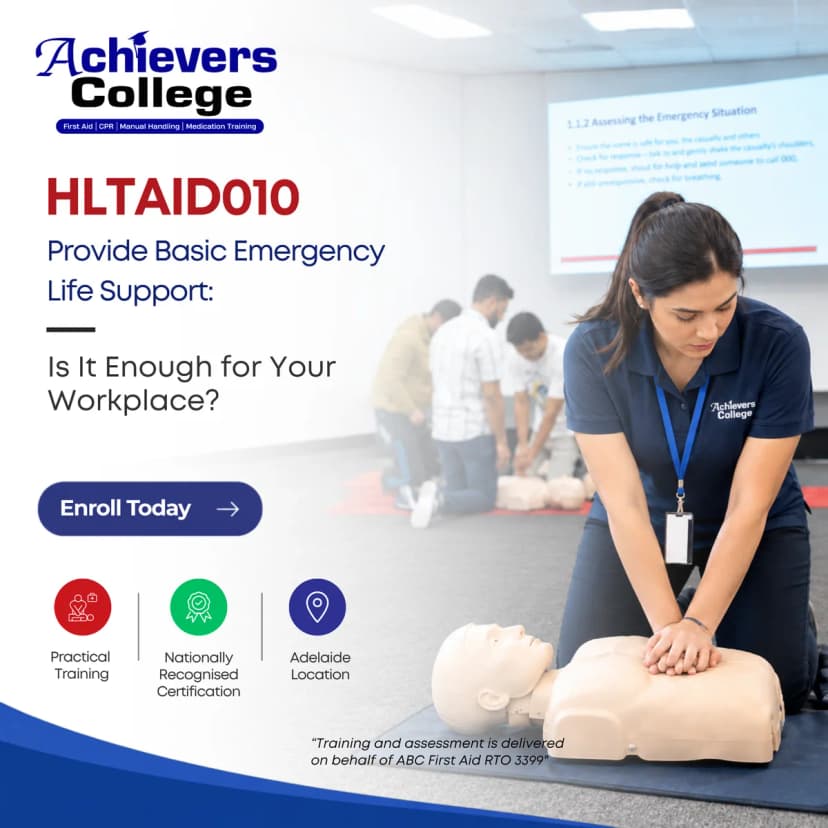
HLTAID011 Provide First Aid training in Adelaide, built specifically for support workers entering disability and community care roles. Our practical, hands-on sessions cover CPR,
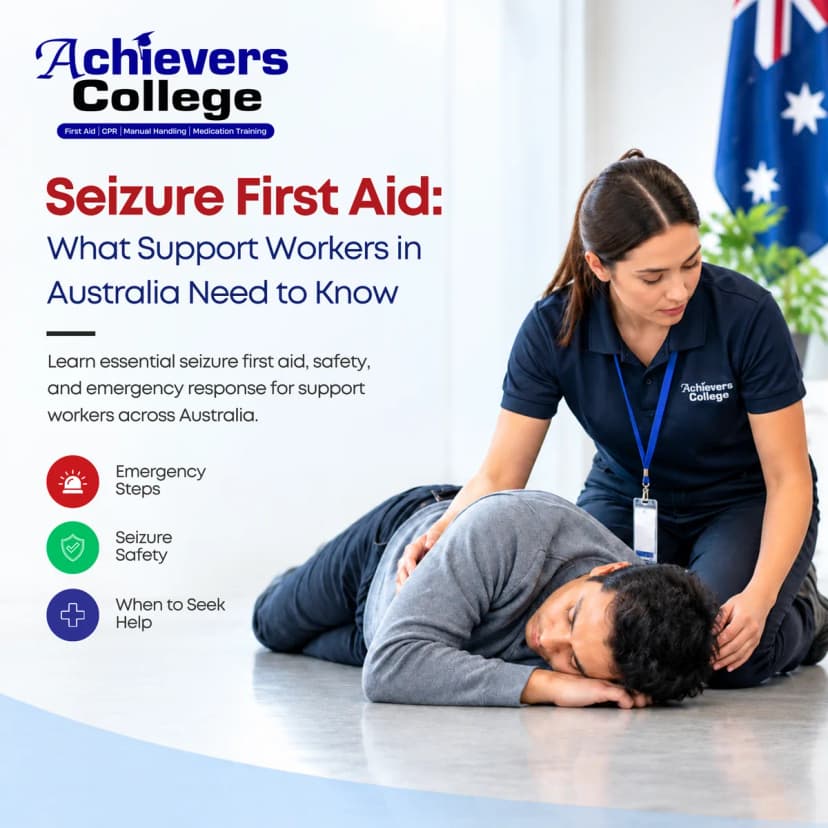
seizure response, anaphylaxis, and emergency scenarios you'll genuinely face on shift.

 Central Adelaide locations
 Daily sessions available
 Small class sizes (max 12)
 4.9/5 rating (250+ reviews)