Quick Answer: What Should You Do During a Seizure?
If someone has a seizure, stay calm, keep them safe and time the seizure. Move nearby hazards, protect their head, and never restrain them or put anything in their mouth. Stay with them until the seizure stops, and
call Triple Zero (000) if emergency medical help is needed.
What Is Seizure First Aid?
Seizure first aid refers to the immediate actions taken to keep a person safe during and after a seizure. The focus is on preventing injury, monitoring the person, staying calm and knowing when
emergency medical assistance is needed.
For support workers, seizure first aid should be provided according to the person's epilepsy management plan, workplace procedures and appropriate training.
What Should a Support Worker Do During a Seizure?
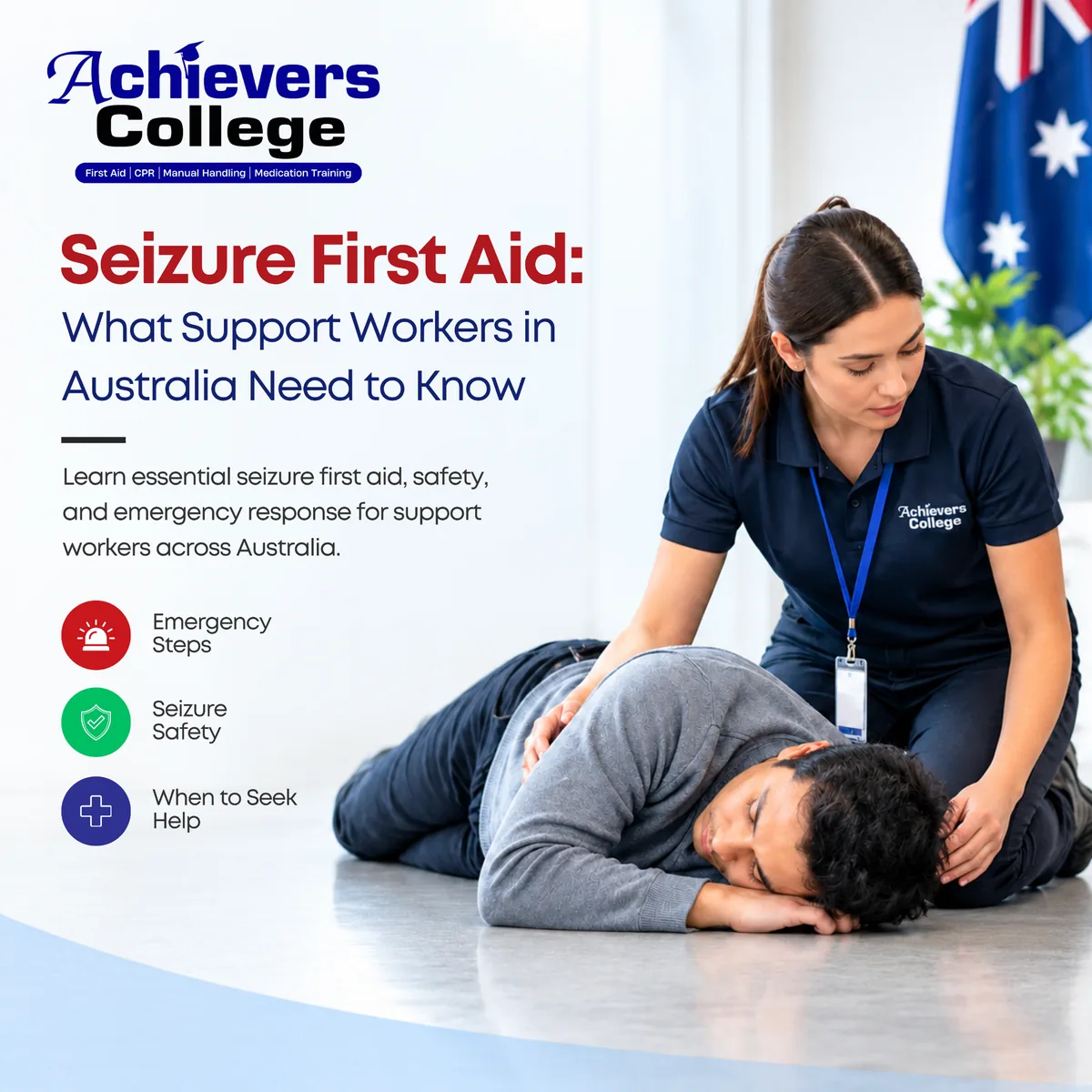
Follow these practical steps:
 1. Stay calm and remain with the person.
- 2. Remove dangerous objects from the surrounding area.
- 3. Protect their head with something soft if possible.
- 4. Time the seizure from the beginning.
- 5. Do not restrain the person's movements.
- 6. Do not put anything in their mouth.
- 7. Monitor their breathing and condition.
- 8. Follow their individual seizure or epilepsy management plan.
- 9. Call 000 when emergency criteria are met.
The priority is always safety. Do not attempt to stop the seizure by holding the person down or placing objects in their mouth.
What Should You NOT Do During a Seizure?
Some common actions can increase the risk of injury.
Never:
- Restrain the person.
- Try to stop their movements.
- Put food, water or objects in their mouth.
- Move them unless they are in immediate danger.
- Leave them alone during the seizure.
- Attempt treatment outside your training or the person's management plan.
These precautions are particularly important for
support workers who may assist people with epilepsy in homes, workplaces, community settings or residential care.
When Should You Call 000 for a Seizure?
Call Triple Zero (000) for an ambulance when:
- The seizure lasts more than 5 minutes.
- Another seizure quickly follows.
- The person remains unresponsive for more than 5 minutes after the seizure.
- The person has suffered an injury.
- The seizure occurs in water.
- It may be the person's first seizure.
- You have another serious concern about their condition.
These situations require urgent medical assessment. When calling 000, follow the emergency operator's instructions and remain with the person where possible.
What Should You Do After a Seizure?
Once the seizure stops, continue monitoring the person and provide reassurance.
After-seizure checklist
- Check their breathing.
- Place them in the recovery position when safe.
- Check for injuries.
- Stay with them until they recover.
- Speak calmly and reassure them.
- Record the seizure duration and relevant observations.
- Follow their epilepsy management or care plan.
- Seek emergency assistance if their condition remains concerning.
A person may feel tired or confused after a seizure. Give them time to recover while continuing to monitor their condition.
Seizure First Aid vs Epilepsy Management
Here’s a quick comparison of seizure first aid and epilepsy management:
| Seizure First Aid | Epilepsy Management |
|---|
| Immediate response during a seizure | Ongoing support and planning |
| Focuses on safety | Focuses on long-term management |
| Protects against injury | Identifies individual support needs |
| Includes emergency response | May include medication instructions |
| Used when a seizure occurs | Used before, during and after seizures |
An
Epilepsy Management Plan (EMP) can include seizure information, safety requirements, supervision needs, emergency contacts, medication instructions and seizure first aid guidance.
Why Is Seizure First Aid Important for Support Workers?
Support workers may assist people with epilepsy or other seizure conditions across NDIS, disability,
aged care and community settings. A seizure can happen unexpectedly, so workers need to respond confidently while following the person's individual plan.
Good first aid knowledge can help workers recognise risks, prevent avoidable injuries and communicate useful information to emergency responders.
Do Support Workers Need Seizure First Aid Training?
The appropriate training depends on the worker's role, the person they support and the requirements of their employer or service provider. Workers supporting people with epilepsy may need training that covers seizure first aid, epilepsy management and emergency medication procedures.
For workers responsible for specific emergency medications, additional specialised training may be required.
Seizure First Aid Training in Adelaide
For support workers in Adelaide, practical
first aid training can help build confidence when responding to medical emergencies. Achievers College provides first aid training in Plympton Park, Adelaide, for people seeking practical workplace skills.
Training can be particularly valuable for people working in:
Conclusion
Knowing seizure first aid can help support workers respond calmly, safely and confidently when a seizure occurs. Remember the essentials: protect the person from injury, time the seizure, never restrain them or place anything in their mouth, and know when to call 000.
If you work in NDIS, disability, aged care or community services, practical
first aid training can help you build the confidence and skills needed to respond to emergencies effectively.
Ready to Build Your First Aid Skills?
Choose practical training that prepares you for real workplace situations.
Achievers College provides first aid training in Plympton Park, Adelaide, helping learners develop practical emergency response skills.
Explore
First Aid Courses at Achievers College and take the next step towards becoming a more confident and prepared support worker.


 Central Adelaide locations
 Daily sessions available
 Small class sizes (max 12)
 4.9/5 rating (250+ reviews)