Why First Aid Compliance is Important in Care Settings
Having a current first aid certificate is a legal and professional requirement if you are employed in childcare or aged care in South Australia. Catastrophes can happen at any moment, whether you're caring for small children in a daycare centre or assisting seniors in an aged care home. Understanding what to do in those few moments that matter can make the difference between near-disaster and disaster.
Furthermore, there is active oversight of compliance by regulatory bodies in both industries. That's why it is important not only for your career but for the safety of those in your care to know exactly what qualifications you need - and when you need to renew them.
Which First Aid Units to Have?
Both industries need employees to have nationally recognised certificates from a
Registered Training Organisation (RTO). For childcare and aged care in SA it is two mandatory units:
HLTAID011 - Provide First Aid
This is the most extensive emergency care qualification that is required for both childcare and aged care. It encompasses a wide variety of emergency response competencies such as:
HLTAID009 - Provide Cardiopulmonary Resuscitation (CPR)
Although CPR is part of HLTAID011, it requires re-training more often - every 12 months. This is because CPR technique guidelines are regularly reviewed by the Australian Resuscitation Council (ARC) and regular hands-on practice is necessary to ensure competency.
For this reason, even if your HLTAID011 certification is still valid, you must maintain your CPR qualification in addition.
When Should Your Certificate Be Renewed?
The most frequent difficulty with renewals for care workers is the understanding of the various renewal periods for the different units. To make things easy to understand:
| Qualification | Renewal Frequency |
|---|
| HLTAID011 - Provide First Aid | Every 3 years |
| HLTAID009 - CPR Only | Every 12 months |
Therefore, a childcare worker or aged care worker usually will have to complete their CPR renewal each year and renew emergency care every 3 years. For many employees, completing both is a much simpler process, as they will be doing both at the same time when their three-year renewal period is up.
Also, there may be occasions when an employer or regulatory agency requires more frequent renewals than the minimum, so please check with your employer and/or relevant body.
Childcare-Specific Requirements in South Australia
The Education and Care Services National Law Act and the National Quality Standard (NQS) require that a minimum of 1 staff member with a current first aid certificate, including CPR, asthma and anaphylaxis management, will be on duty at all times when children are in care.
This translates to practice as:
In addition, the National Quality Framework (NQF) coordinates the compliance monitoring of medical assistance as part of its emergency care quality rating process. Services that are not compliant with the standards may be given improvement notices that could impact their quality rating and regulatory status.
Aged Care-Specific Requirements in South Australia
Within the aged care industry, compliance with first aid is regulated by the Aged Care Act (1997), the Aged Care Quality Standards and the expectations of the
Aged Care Quality and Safety Commission. In these guidelines, aged care workers are required to be able to respond to medical incidents effectively.
Although this can differ from role to role and provider to provider:
With the high level of vulnerability of aged care residents and the complexities of their health needs, a well-trained workforce is more than just a compliance requirement, it is essential to quality care.
What About If Your Certification Expires?
Many workers take too light a view about this. The consequences of the expiration of your first aid and CPR certification could be serious, both for you and your employer.
At the personal level:

Limited duties: You may be relieved of duty or the scope of your duties may be limited, until re-certification.
Job security: Your job could be at risk if you are employed in a job where medical assistance certification is required to remain in the job.
Legal exposure: In the event of an emergency where you acted outside your certified competency, there could be professional and legal implications.
For the employer/facility:
Penalties: Government bodies have the powers to provide compliance notices or penalties.
Insurance: Staff members operating under expired certifications may impact coverage under insurance.
Quality ratings: Childcare services may be downgraded with respect to quality ratings.
Therefore, it is strongly advised that renewals are scheduled 4-6 weeks prior to the expiration date of your certificate and not at the last minute. This means you have time to find an appropriate session, finish any pre-course online learning and receive your Statement of Attainment without any break in compliance.
How Group and Team Training Works for Facilities
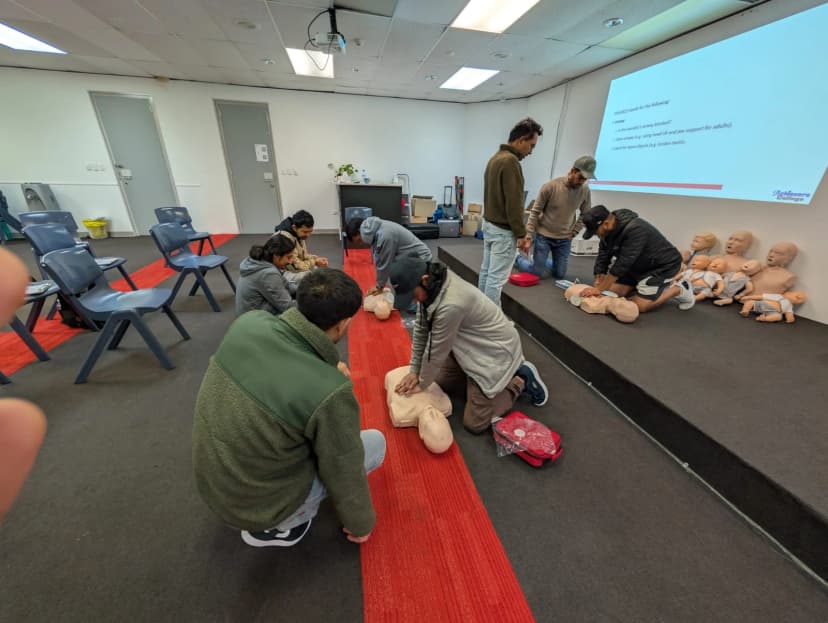
Group or onsite workplace training is one of the most effective ways of managing compliance in childcare centres and aged care facilities. Instead of employees attending individual public training courses, facilities can schedule a trainer to provide a single training session for the entire staff in the facility.
The advantages of this are many:
Benefits of group bookings
Minimal disruption - Staff get trained in their own workplace which cuts down travel time and scheduling complexity.
Discounted rates per person per group booking.
Consistent training - all staff are trained to the same, uniform standard of competency.
Compliance management - Employers can organise renewals, meaning that every employee's certification is up to date and doesn't expire at different times.
Conclusion
In South Australia, childcare and aged carers must keep their first aid and CPR certificate up to date. These qualifications are designed to ensure workplaces are compliant, enhance emergency responses and contribute to safer working practices for children, older people and vulnerable people.
Achievers College, Plympton Park, SA, provides Adelaide nationally recognised first aid training courses and CPR courses for individuals and workplace teams, that are flexible and easily accessible.


 Central Adelaide locations
 Daily sessions available
 Small class sizes (max 12)
 4.9/5 rating (250+ reviews)