Blogs
Emma Thompson
Senior First Aid Instructor
02 Dec 25
Everything you need to know about First Aid & CPR training in Australia — from course types and costs to compliance and booking in Adelaide.
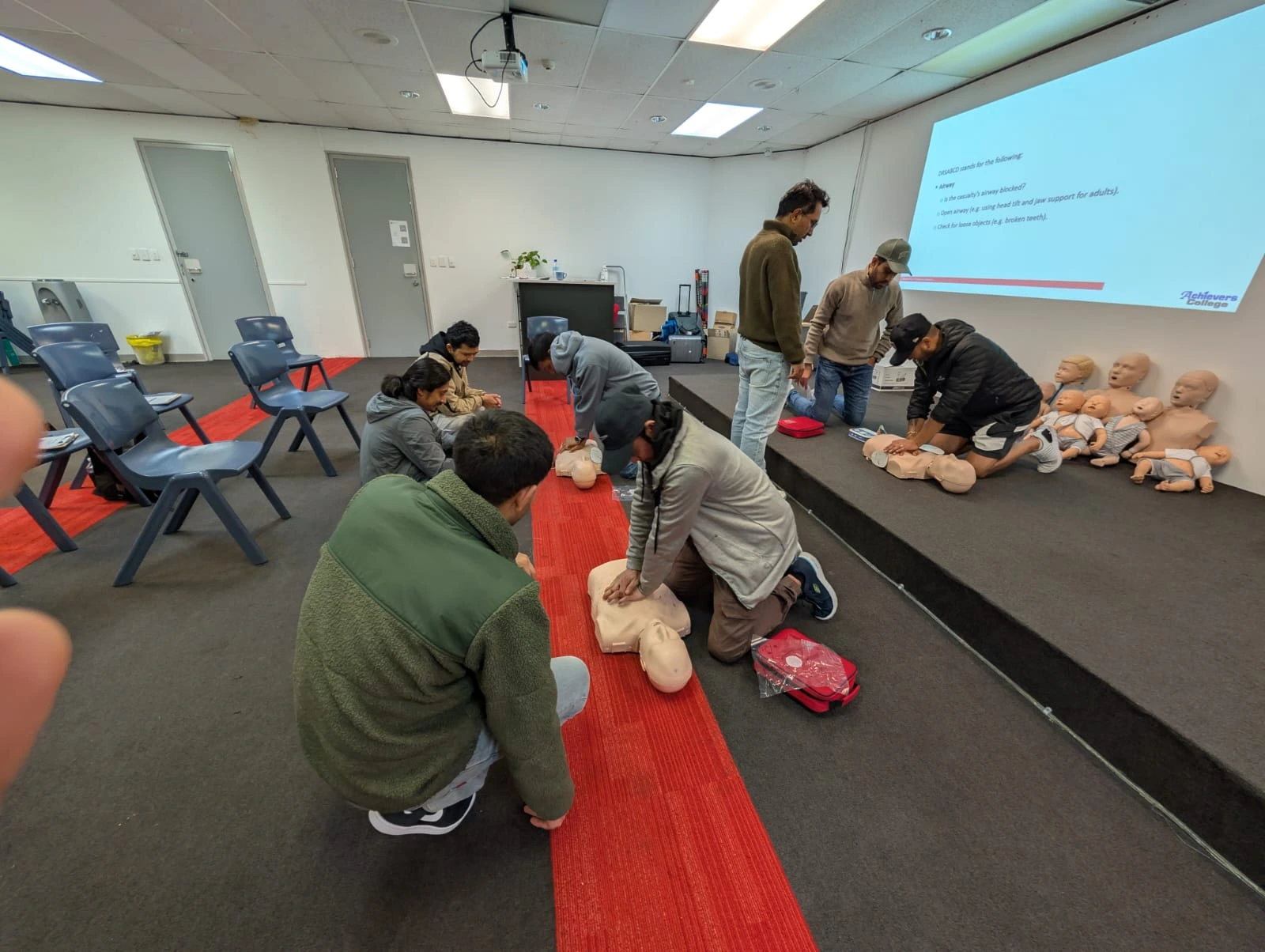
 Individuals who want to be prepared for family or community emergencies.Professionals in healthcare, education, childcare, aged care, disability support, construction, and hospitality.Employers who need compliant, confident teams (and fewer safety incidents).HR/Training Coordinators planning group sessions or refresher programs.Clarity on what First Aid & CPR are (beyond box-ticking).Exactly which course you need — and why.How long it takes, what it costs, and how long it stays valid.How to renew without stress (and why keeping skills sharp matters).A roadmap to group training and onsite options for Adelaide workplaces.CPR early = better outcomes. Starting CPR quickly can dramatically improve survival odds when the heart stops.Validity matters. First Aid certificates are typically valid 3 years; CPR refreshers are recommended annually.Time & cost are predictable. Expect 2-6 hours depending on the course, and $60-$150 depending on provider and format.Choose by purpose: HLTAID009 (CPR only), HLTAID011 (Provide First Aid), HLTAID012 (Childcare First Aid).Workplaces have obligations. Employers must provide adequate First Aid resources and trained personnel.Practical beats theoretical. Online theory can help, but hands-on practice is critical (and required for recognition).Confidence is the hidden ROI. Beyond compliance, training gives you the calm and clarity to act when it counts.You don't have to learn alone. Group training and onsite sessions make it easier (and often cheaper) for teams.Preserve life.Prevent the condition from worsening.Promote recovery.Check for danger and responsiveness.Call for help / send for an AED.Open the airway; check breathing.Start chest compressions (and breaths if trained).Use an AED as soon as possible.Danger - check for hazards.Response - check if the person responds.Send for help - call 000 / get an AED.Airway - open and clear.Breathing - look, listen, feel.CPR - start compressions (and breaths if trained).Defibrillation - attach AED ASAP.CPR for adults, children, and infants.AED use and safety.Choking (including pediatric scenarios).Bleeding control & shock management.Burns & scalds (cooling, covering, when to escalate).Fractures & sprains (support, immobilise, monitor).Asthma & anaphylaxis (spacers, auto-injectors, escalation).Seizures, strokes, diabetic emergencies (recognition & first response).Communication & handover to emergency services.A toddler choking on food.A colleague collapsing from cardiac arrest.A neighbour burned in a kitchen accident.First Aid (HLTAID011): valid for 3 years.CPR (HLTAID009): refresh every 12 months.Studies show CPR confidence drops by up to 50% within a year — regular refreshers keep you sharp.If your certificate has lapsed, you'll need to retake the full course to regain compliance.Online-only courses are not nationally recognised in Australia. Practical sessions must be face-to-face.CPR refresher: as little as 2 hours, $60-$80.Full First Aid (HLTAID011): typically 6 hours (1 day), $100-$150.Childcare First Aid (HLTAID012): 1 full day with additional scenarios, $120-$160.Many employers cover or reimburse staff training costs.Workplaces: By law, Australian businesses must ensure adequate First Aid coverage with at least one trained staff member on-site at all times.Healthcare & Aged Care Workers: CPR and First Aid are fundamental compliance requirements — often paired with Manual Handling.Teachers & Childcare Staff: Schools and early learning centres must have staff trained in Childcare First Aid (HLTAID012).Parents & Carers: Emergencies happen at home more than anywhere else — from choking toddlers to kitchen burns.Everyday Citizens: Whether you're a sports coach, community volunteer, or simply want to be prepared.Ensure access to adequate First Aid resources.Nominate and train staff as First Aid officers.Keep certificates current and records updated.Many industries (especially healthcare and aged care) also require Manual Handling training alongside First Aid.HLTAID009 - Provide CPR: Short, focused training. Perfect for refreshers or roles where CPR alone meets requirements.HLTAID011 - Provide First Aid: The most popular choice. Covers CPR plus bleeding control, burns, fractures, medical emergencies, asthma, and anaphylaxis.HLTAID012 - Childcare First Aid: Required by early childhood educators and teachers. Includes child-specific scenarios.Refresher vs Full Certification: If your certificate is current, a refresher is shorter and cheaper. If expired, you'll need the full course.HLTAID009 Provide CPR (2 hours).HLTAID011 Provide First Aid (1 day).HLTAID012 Childcare First Aid (1 day, childcare focus).Manual Handling Training (especially for healthcare and aged care).Convenience: Central Adelaide training venues with good transport links.Flexibility: Multiple sessions every week, including evenings and weekends.Onsite training: We come to your workplace anywhere in Adelaide for group bookings.
Ready to get started?
📅 Ready to book? See upcoming First Aid & CPR sessions in Adelaide.👥 Employers: Book onsite group training for your Adelaide workplace today.Get certified in First Aid & CPR with Adelaide's leading provider
 Central Adelaide locations
 Daily sessions available
 Small class sizes (max 12)
 4.9/5 rating (250+ reviews)
Next session: Tomorrow 9:00 AM
3 spots remaining
Join thousands of Adelaide residents who've gained the confidence to act in emergencies. Our next session starts tomorrow with only 3 spots remaining.
Book Your Spot
29 Sept 26
Need Manual Handling Training in Australia? Discover WHS requirements, who needs training, refresher guidance, and practical tips for support workers.
27 Sept 26
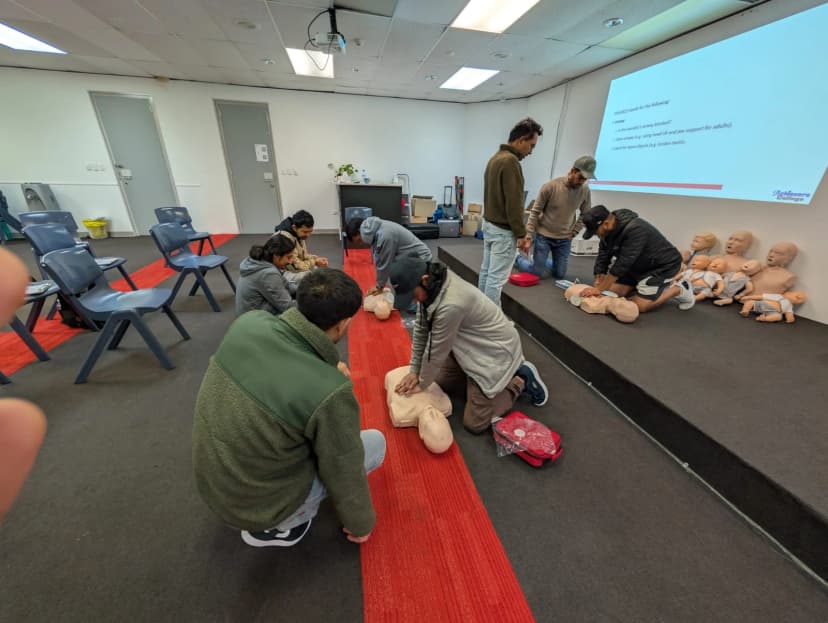
Do NDIS support workers need first aid? Learn provider requirements, CPR renewal, HLTAID011 and how NDIS training compares with aged care.
01 Sept 26
Learn essential seizure first aid for support workers, including emergency steps, seizure safety and when to seek help across Australia.