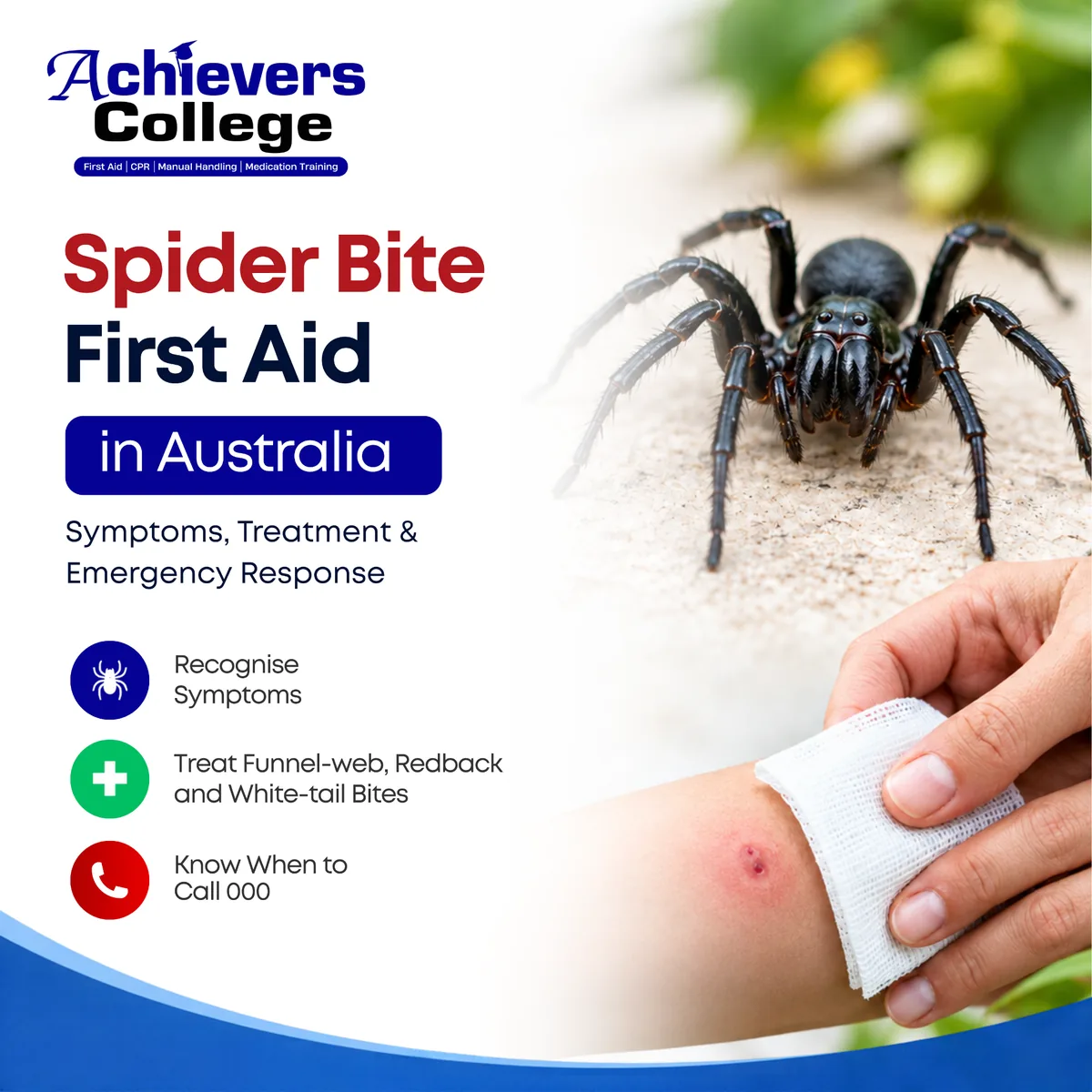
Spider bites are common across Australia, particularly during the warmer months when spiders are most active in gardens, sheds, and outdoor work areas. Most spider bites cause only mild, short-lived symptoms and can be treated at home.
However, funnel-web bites can be medical emergencies, while redback bites may cause severe pain and require medical assessment. Learn essential emergency response skills through our
first aid course in Adelaide.
This guide covers how to identify Australia's most medically significant spiders, what first aid to give for each, and when to call 000.
Why Does Spider Bite First Aid Matter?
Of the thousands of
spider species in Australia, only a few pose a real risk to human health. Knowing which spider is responsible and which first aid steps apply can prevent complications and, in serious cases, save a life.
First aid varies depending on the suspected spider and the symptoms present, so following current Australian first aid guidance is essential to giving the right response.
Common Spider Bite Symptoms
- Pain, redness, or swelling at the bite site
- Itching or localised skin irritation
- Nausea or vomiting
- Sweating
- Muscle pain
- Headache
- Difficulty breathing (medical emergency)
If symptoms worsen, or breathing difficulty or signs of a severe allergic reaction develop, treat it as a medical emergency and call 000.
Australian Spider Identification & First Aid Guide
Quick-reference guide to identify common Australian spiders by their concern and match them to the correct first aid response.
| Spider Type | Main concern | First Aid Response |
|---|
| Funnel-Web Spider | Medical emergency | Pressure immobilisation bandage + call 000 |
| Redback Spider | Pain and systemic symptoms | Cold pack + medical assessment |
| White Tail Spider | Usually local symptoms | Clean wound, monitor for infection |
| Other Spiders | Usually mild local symptoms | Basic wound care |
Funnel-Web Spider Bite First Aid
Identification: Funnel-web spiders are large, dark-coloured spiders found mainly in eastern Australia. If you suspect a bite from a funnel-web or another large black spider, treat it as a medical emergency.
Symptoms can appear within minutes and may include:
- Severe pain at the bite site
- Tingling around the mouth
- Excessive sweating
- Muscle twitching
- Nausea
- Increased heart rate
- Collapse in severe cases
- Call 000 immediately.
- Keep the person calm and still - movement speeds venom spread.
- Apply a pressure immobilisation bandage from the bite site up the entire limb.
- Splint the limb if possible.
- If safe, mark the bite site or take a photo.
- Record the time of the bite and when the bandage was applied.
- Keep the person still and wait for emergency services.
Redback Spider Bite First Aid
Identification: Redback spiders are smaller than a funnel-web, black with a distinctive red stripe, typically found in sheds, garages, and outdoor furniture.
Symptoms include:
- Immediate pain that intensifies over several hours
- Sweating near the bite
- Nausea
- Headache
- Muscle weakness
- Abdominal pain
- Wash the area with soap and water. Do not use a pressure immobilisation bandage - it isn't effective for redback bites and may worsen pain.
- Apply a cold pack wrapped in a cloth to ease pain and swelling.
- Monitor symptoms closely.
- Call 000 if pain becomes severe or the person becomes seriously unwell.
White Tail Spider Bite First Aid
Identification: White tail Spiders are dark grey to black, long thin body, with a distinctive white mark on the tip of the abdomen. Often found indoors.
Symptoms are usually:
- Localised pain
- Redness
- Swelling
- Itching
- No current evidence links white-tail bites to skin ulcers.
- Wash the area with soap and water.
- Apply a cold compress to reduce pain and swelling.
- Monitor for signs of infection (increasing redness, warmth, pus, or worsening pain) and seek medical advice if these appear.
When to Call 000
- A funnel-web spider bite is suspected.
- The person has difficulty breathing.
- The person becomes unconscious.
- Severe symptoms develop rapidly.
- There's chest pain.
- There are signs of anaphylaxis (facial or throat swelling, wheezing, dizziness, collapse).
When You Can Monitor at Home
Many minor spider bites can be managed at home if:
- Symptoms remain mild.
- Pain is manageable.
- There is no breathing difficulty.
- Swelling remains localised.
- No serious allergic reaction occurs.
Continue monitoring symptoms for 24 - 48 hours and seek medical advice if concerns develop.
How to Reduce the Risk of Spider Bites
Preventative measures include:
- Wearing gloves while gardening.
- Shaking out shoes before wearing them.
- Checking outdoor furniture regularly.
- Keeping storage areas tidy.
- Using caution when moving timber, rocks, or debris.
- Teaching children to avoid handling spiders.
These simple precautions can significantly reduce the risk of spider bites around the home and workplace.
Ready to Learn First Aid Properly? Get Certified in Adelaide


 Central Adelaide locations
 Daily sessions available
 Small class sizes (max 12)
 4.9/5 rating (250+ reviews)